
Water Before Meals, Why It Worked in One Study Not Another
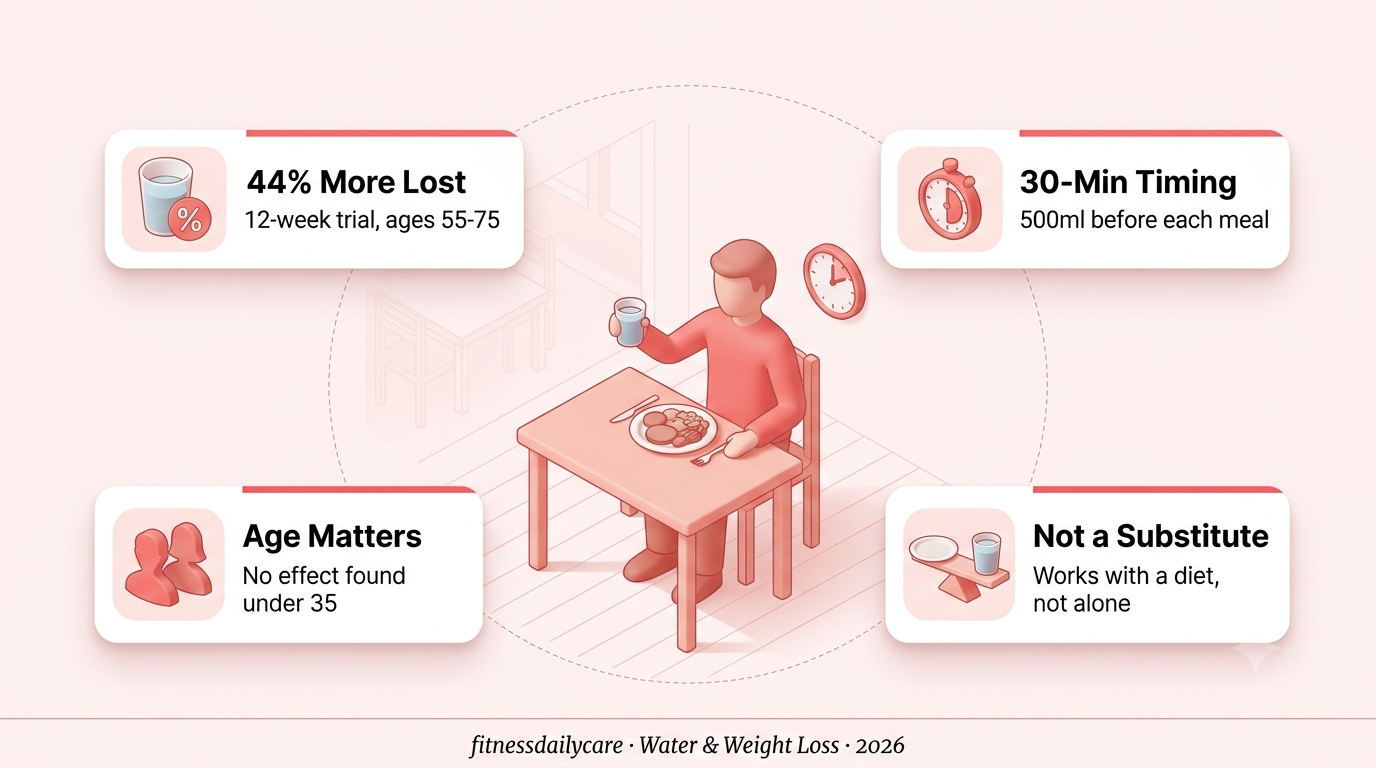
A 12-week trial found adults 55-75 who drank 500ml of water before each meal lost 44% more weight than a diet-only group. In adults under 35, the same habit did nothing measurable.
Water before meals is one of the oldest pieces of diet folklore there is, and for a long time there wasn’t much of a randomized trial behind it. That changed in 2010, when researchers at Virginia Tech put 48 overweight and obese adults aged 55 to 75 on the same 1,200-1,500 calorie diet for 12 weeks. Half the group also drank 500ml of water — about two cups — 30 minutes before each of their three daily meals. The water group lost roughly 2kg more than the diet-only group, a 44% greater decline in weight over the same period.
Here’s the part that doesn’t make it into most headlines. A separate trial from the same research lab tested the identical water-before-meals habit in adults aged 21 to 35 and found no significant difference in how much they ate at the following meal. Fullness ratings went up in everyone, but only the older adults actually consumed less food. A smaller Korean trial in young, non-obese adults later found the opposite — a measurable drop in food intake. The honest summary is that the age-55-plus result is well replicated; the under-35 result is still an open question.
This article breaks down what water before meals is actually shown to do, who it’s been shown to help most, and how to use the protocol from the strongest trial without expecting it to replace a calorie deficit.
Why It May Work
Water fills stomach volume and raises fullness ratings before eating begins, a well-documented gastric distension effect.
What the 12-Week Trial Showed
Dennis et al. found 500ml before each meal led to 44% more weight lost than diet alone, over 12 weeks.
The Myth This Complicates
“Drink water and you’ll automatically eat less” isn’t universal — Van Walleghen found no measurable effect in adults under 35.
Who It Helps Most
The clearest, most replicated benefit is in adults 55 and older, using 500ml about 30 minutes before each meal.
Two cups of water won’t out-diet a burger.
But it can make the smaller portion feel like enough.
Water Before Meals, the Practical Version
Drink 500ml, 30 Minutes Before Each Meal
The Tested ProtocolThis is the exact timing and volume used in the trial that produced the 44% result — not “drink more water generally,” but a specific 500ml dose about half an hour ahead of breakfast, lunch, and dinner. Sipping water during the meal itself wasn’t the protocol tested, so it’s a different habit with different (largely untested) evidence behind it.
Don’t Expect Magic If You’re Under 35
Honest ExpectationsThe evidence in younger adults is genuinely mixed — one trial found nothing, another found a real drop in intake. If you’re in that age range, this is a low-cost habit worth testing on yourself for a week or two rather than assuming it will replicate the older-adult result.
Pair It With Volume, Not Just Water Alone
Stack the EffectThe mechanism behind pre-meal water is stomach fullness before the first bite. Starting meals with high-volume, lower-calorie foods — a broth-based soup, a large salad — works on the same mechanism and stacks with the water habit rather than competing with it.
Treat It as a Small Lever, Not the Whole Plan
Realistic SizingEven in the best-case trial, water before meals amplified an existing calorie-restricted diet — it didn’t replace one. The 2kg difference over 12 weeks is meaningful but modest next to the deficit itself, which is why it belongs in the “free, low-effort helper” category rather than the “primary strategy” category.
- 500ml (about 2 cups) — the volume used in the trial with the strongest result
- 30 minutes before eating — not during the meal, which wasn’t the tested protocol
- Most reliable at 55+ — younger adults should treat this as a personal experiment, not a given
- Stack with high-volume foods — soup or salad starters work on the same fullness mechanism
- Keep the calorie deficit — water preloading amplifies a diet, it doesn’t substitute for one
⚠️ What Water Preloading Won’t Do
1. It’s not a substitute for a calorie deficit. Every trial behind this habit paired water with an existing hypocaloric diet — the water didn’t do the work alone.
2. The effect size shrinks or disappears in younger adults. Don’t assume the 44% headline number applies at every age; the trial that produced it studied adults 55-75 specifically.
3. More water isn’t automatically better. There’s no evidence that exceeding roughly 500ml per meal adds further benefit, and drinking far beyond thirst and comfort isn’t supported by this research.
The habit that helped 55-to-75-year-olds most,
might do nothing for you at 25 — and that’s still useful to know.