
Why You Need Less Sodium
The Heart Risk Nobody Explains
A 2026 cohort study tracked over 25,000 adults and found sodium’s effect on heart failure risk had nothing to do with the salt shaker
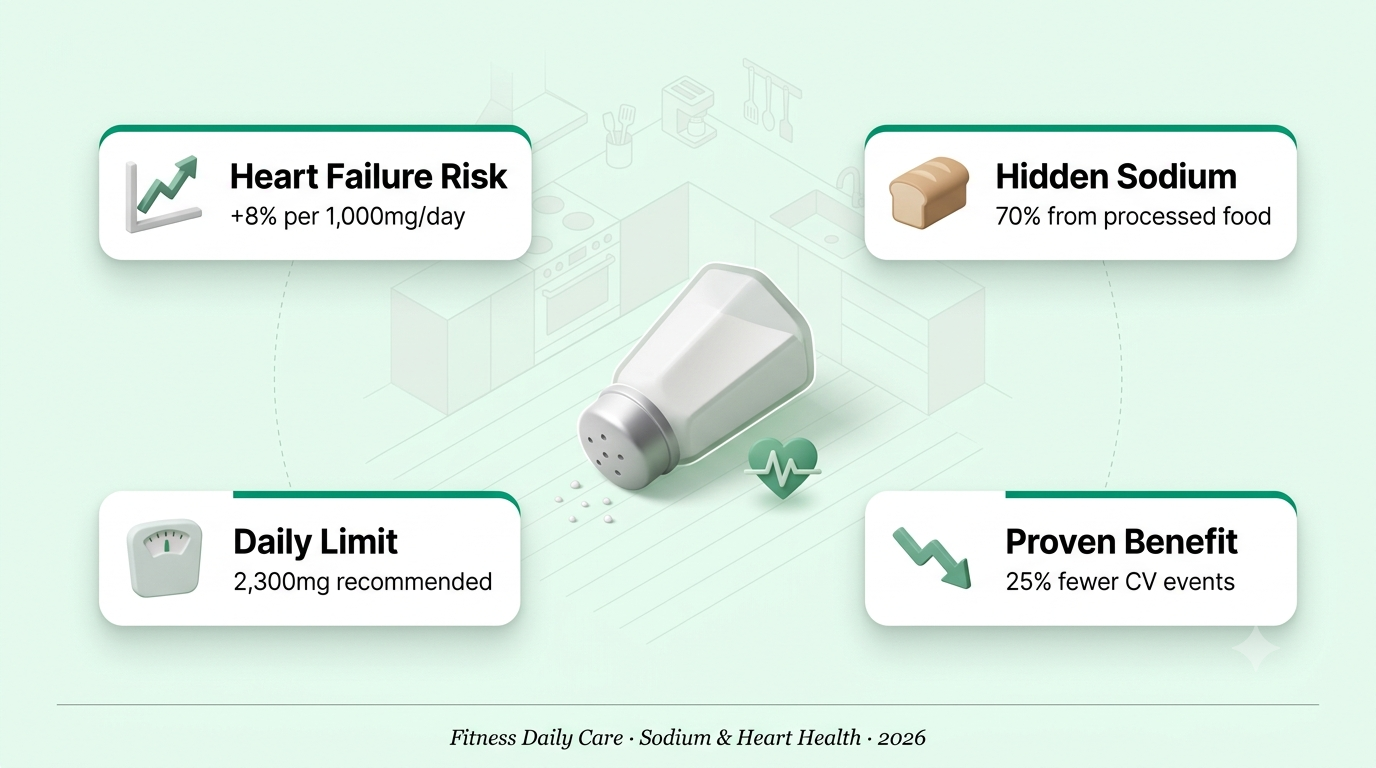
I didn’t think much about why you need less sodium until I read a 2026 Vanderbilt study that tracked more than 25,000 people for nearly a decade, and one number stuck with me: every extra 1,000 milligrams of sodium a day raised heart failure risk by 8%, independent of blood pressure, weight, or overall diet quality. That’s not a scare headline about the salt shaker.
It’s what happens with the sodium already baked into bread, deli meat, canned soup, and pizza — foods that don’t taste salty enough to raise suspicion. The average adult in that study was consuming close to double the recommended daily limit, largely without ever reaching for a shaker.
This isn’t about eliminating salt entirely. It’s about why the guidelines exist, what the newest research actually found, and where sodium hides that most people never think to check.
Why Sodium Raises Risk
Excess sodium raises blood pressure and drives fluid retention, both of which force the heart to work harder over time.
Heart Failure’s Toll
Heart failure contributes to roughly 425,000 deaths a year in the US, and sodium is one of the few risk factors people can act on directly.
It’s Not the Salt Shaker
About 70% of dietary sodium comes from processed and restaurant food — bread, deli meat, and soup rank higher than any shaker ever could.
It Holds Up in Long-Term Trials
Long-term follow-up data found sodium restriction cut cardiovascular events by 25% over 10 to 15 years.
You don’t taste most of the sodium you eat.
That’s exactly why the guidelines exist.
It Raises Blood Pressure, Even If You Feel Fine
Silent EffectA systematic review for the Nordic Nutrition Recommendations found a linear dose-response relationship between sodium and blood pressure, confirmed by randomized trials lasting at least 4 weeks. The rise happens gradually, with no symptoms along the way — which is exactly why so many people underestimate it.
It’s Linked to Heart Failure, Not Just Hypertension
2026 StudyThe 2026 Vanderbilt-led study followed 25,306 adults for a median of nearly 10 years. Each 1,000 mg/day increase in sodium intake was tied to an 8% higher risk of new-onset heart failure, and the association held even after adjusting for hypertension, body mass index, and coronary artery disease.
It Hides in Foods You Wouldn’t Suspect
Hidden SodiumAccording to the CDC, about 70% of sodium in the average diet comes from processed and restaurant food, not the shaker. A single slice of bread can carry 150 to 230 mg, a serving of deli turkey can top 1,000 mg, and one slice of pizza can run as high as 760 mg — none of which taste distinctly “salty.”
Cutting Back Has Measurable, Proven Benefit
Proven PayoffLong-term follow-up from the Trials of Hypertension Prevention found sodium restriction reduced cardiovascular events by 25% over 10 to 15 years. Separately, researchers estimated that capping intake at 4,000 mg/day could prevent 6.6% of new heart failure cases over a decade, saving close to $2 billion a year in healthcare costs.
Cutting sodium isn’t about giving something up.
It’s about noticing where it was hiding in the first place.
- Scan for “sodium,” not “salt” — a single can of soup can carry more than half a day’s limit
- Rinse canned beans and vegetables — this alone can cut their sodium by roughly 40%
- Choose “reduced sodium” broths and deli meats when they’re available
- Season with citrus, herbs, and vinegar instead of reaching for salt
- Cook at home more often — processed and restaurant food account for about 70% of sodium intake
⚠️ Where the Evidence Has Nuance
1. Heart failure evidence is more mixed than hypertension evidence. A recent meta-analysis found sodium restriction’s effect on hard clinical outcomes in existing heart failure remains debated, even though the hypertension benefit is well established. Anyone already diagnosed should follow their care team’s guidance rather than a general target.
2. Sodium sensitivity varies by person. Age, kidney function, and conditions like diabetes all change how much a given intake actually affects your blood pressure.
3. This isn’t about chasing zero. Sodium is an essential nutrient. The goal is landing near 2,300 mg/day (or 1,500 mg/day with existing heart disease), not eliminating it.