
Lower Triglycerides,
5 Foods to Avoid That Aren’t Fat
The number one driver of high triglycerides isn’t butter, red meat, or eggs. It’s sugar, refined starch, and alcohol — and cutting those beats cutting fat every time.
Here’s the surprise most people miss. Triglycerides are the fat molecules floating in your blood — so it feels intuitive that “eating fat” would raise them. That’s not what the evidence says. The overwhelming driver of high triglycerides is excess sugar, refined carbs, and alcohol, which the liver converts into new triglycerides via a process called de novo lipogenesis.
Ancel Keys spent decades chasing dietary fat as the villain. The last 15 years of hepatology and endocrinology have flipped the script. A 2022 meta-analysis on fructose showed a dose-dependent rise in liver triglyceride accumulation. AHA’s own scientific statement singles out added sugars and simple carbohydrates as the primary lever people can actually pull. Dietary saturated fat matters far less for this number than most patients assume.
Below are the five foods to cut first — the ones that move the number fastest. Most people who eliminate all five see a drop of 50–150 mg/dL within 6–12 weeks, even without weight loss.
Sugar → liver → triglycerides
Excess sugar and fructose get converted to triglycerides in the liver through de novo lipogenesis — the main driver, not dietary fat.
Alcohol hits harder than red meat
Even moderate weekly beer or cocktail intake can lift triglycerides by 30–40%, especially with sweet mixers.
Cut all 5, see a drop in weeks
Most people watching their lipid panel see a 50–150 mg/dL drop within 6–12 weeks of clean cuts, no weight loss required.
Butter, eggs, and red meat
Saturated fat matters more for LDL cholesterol than for triglycerides. Cutting fat while eating soda won’t fix the number.
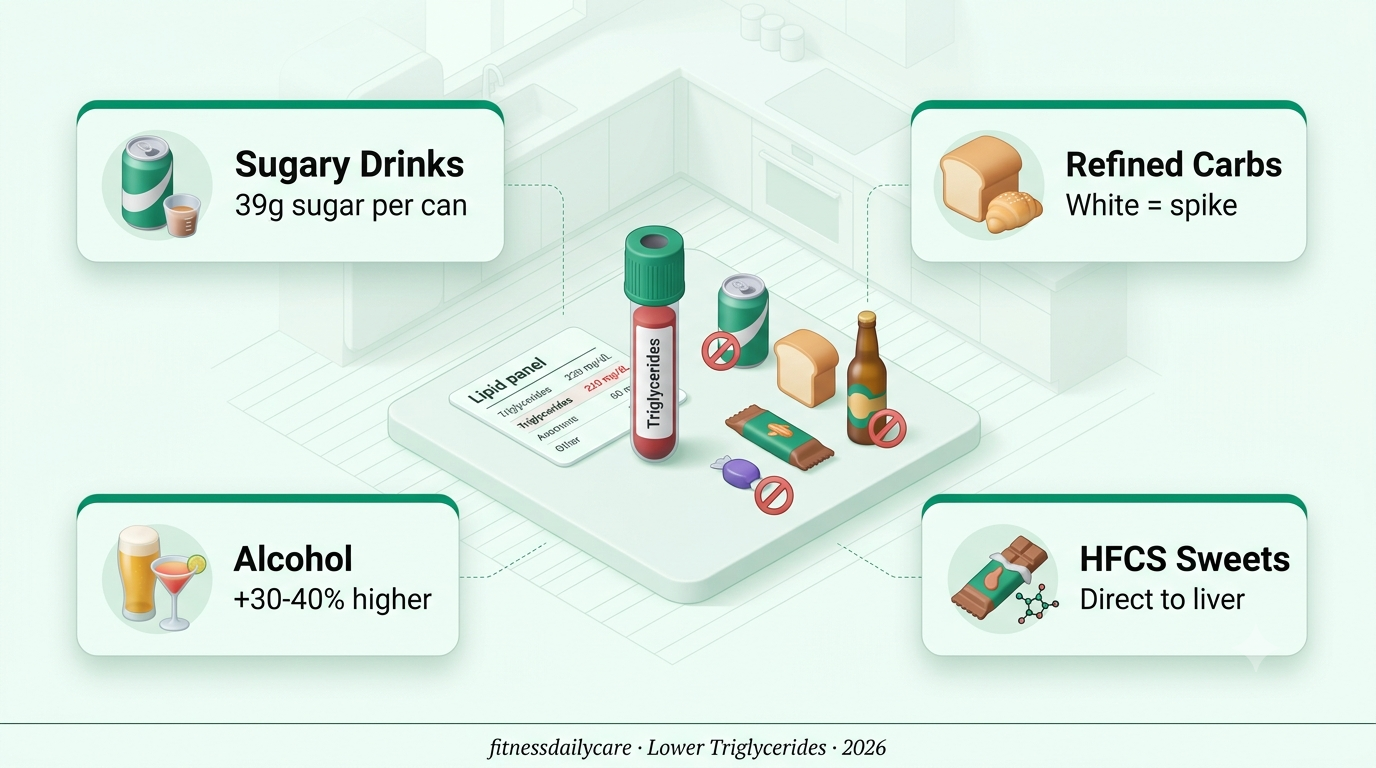
Sugar-sweetened beverages (soda, sweet coffee, sports drinks)
BIGGEST DRIVERA single 12 oz (355 mL) can of Coke contains about 39g of sugar — mostly as high-fructose corn syrup in the US market. Fructose hits the liver directly and is preferentially converted into triglycerides. Studies consistently show sugary drinks are the single largest dietary driver of elevated triglycerides. That includes sweetened iced coffee, sports drinks, sweet tea, energy drinks, and any “juice” that isn’t 100% fresh whole fruit blended at home.
Refined white carbs (bread, pasta, white rice, pastries)
STEALTH DRIVERAnything that hits the bloodstream as a fast glucose spike ends up feeding the same liver pathway. White bread, croissants, white pasta, white rice, breakfast cereals with more than 8g of sugar, and pastries all count. The insulin surge from refined carbs signals the liver to package excess energy as triglycerides — the same VLDL particles that show up in your lipid panel.
Alcohol — especially beer and sweet cocktails
FAST HITAlcohol goes to the liver, which stops burning fat to process it first. Beer adds carbs on top. Cocktails add sugar. Studies show that even moderate drinkers — 5–7 drinks per week — often carry triglycerides 30–40% higher than teetotalers. Very high triglycerides are so tightly linked to heavy drinking that AHA guidelines recommend eliminating alcohol entirely once fasting values pass 500 mg/dL.
High-fructose sweets (candy, sweetened yogurts, granola bars)
HIDDEN SUGARCandy, flavored yogurt cups (many carry 15–25g added sugar per serving), granola bars, breakfast pastries, and “health” snacks with cane sugar, agave, honey, or HFCS at the top of the ingredient list. Fructose is the ingredient that most directly drives liver triglyceride production — this is why sugary snacks matter more than the saturated fat in butter.
Trans fats and deep-fried ultra-processed foods
DOUBLE HITThis is the one “fat” on the list, and it’s here because trans fats independently raise triglycerides while also lowering HDL. Anything with “partially hydrogenated oil” on the label (rare in the US since the 2018 FDA ban but still present in some imports), most fried fast food, commercial baked goods, microwave popcorn, and stick margarines. This is the one lipid people are right to fear — not butter or eggs.
Your triglyceride number tracks sugar,
not butter.
- Week 1 — cut all sugar-sweetened beverages, sweet coffee, energy drinks
- Week 2 — swap white bread, white rice, and pastries for whole-grain versions
- Week 3 — cap alcohol at 1–2 drinks per week, dry wine preferred
- Week 4 — audit yogurts, granola bars, cereal for added sugar; pull anything >10g/serving
- Week 5–6 — retest fasting lipid panel and compare
⚠️ WHEN DIET ALONE ISN’T THE ANSWER
1. Triglycerides ≥500 mg/dL. This is the pancreatitis risk zone — see a physician within days, not months. Medication (fibrates, high-dose EPA) is typically indicated alongside diet.
2. Familial hypertriglyceridemia. Genetic forms exist. If lifestyle changes barely budge the number over 3 months, ask about genetic screening.
3. Uncontrolled diabetes or hypothyroidism. Both drive up triglycerides independently. Fix the underlying condition first, then reassess diet.