
Zone Zero Training, The Recovery
Method Below Zone One
It’s the fitness zone so gentle it barely counts as exercise — and elite endurance athletes spend most of their training time there.
Zone zero training sounded like a joke the first time I heard it — a “workout zone” so easy it barely counts as exercise? But the more I looked into it, the more it made sense as a real gap in most people’s routines, not just another wellness buzzword.
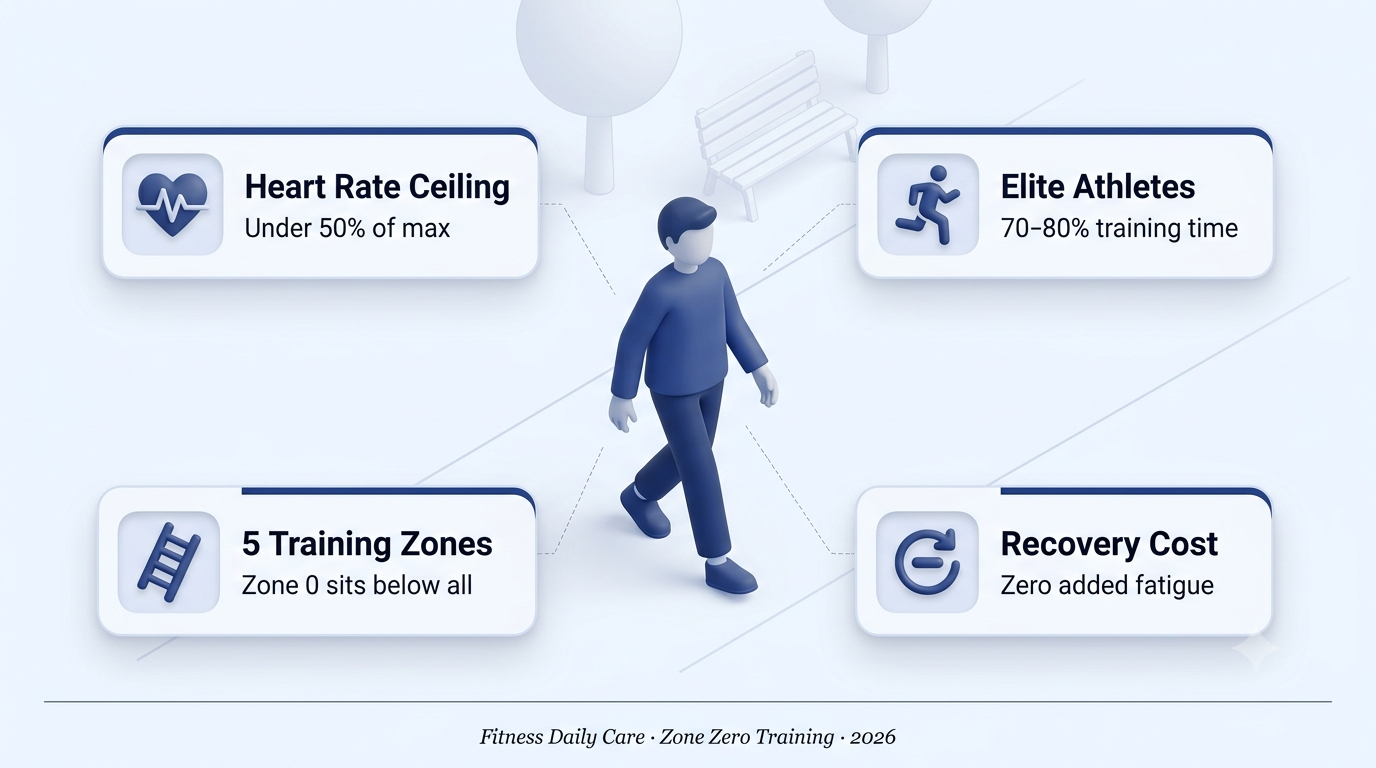
The definition is simple: movement that keeps your heart rate below 50% of your maximum — below even Zone 1, the gentlest tier in the standard 5-zone heart-rate training system. Slow walking, light stretching, gentle yoga, standing instead of sitting, doing chores at an unhurried pace. Elite endurance athletes reportedly spend 70–80% of their total training time in this low-intensity range, using it to accumulate movement volume without adding fatigue on top of their hard sessions.
This article breaks down exactly where Zone Zero sits on the heart-rate scale, what it actually does for recovery, and where its real limits are.
It’s How Elite Athletes Actually Train
Endurance athletes spend the large majority of total training time at very low intensity, reserving hard efforts for a small fraction of sessions.
It Won’t Build Strength Or VO2 Max
Zone Zero alone doesn’t create enough stimulus to meaningfully improve fitness, strength, or aerobic capacity on its own.
It’s Active Recovery, Not Rest
Gentle movement increases blood flow and supports circulation without adding the fatigue a hard workout or even a Zone 2 session would.
Almost Anything Counts
Slow walking, light stretching, standing instead of sitting, and unhurried chores all qualify — no gym or equipment required.
What Zone Zero Training Actually Is
DefinitionsZone Zero describes movement that keeps your heart rate under roughly 50% of its maximum — below even Zone 1, which typically runs 50–60%. It’s the difference between sitting still and doing something, without the effort of an actual workout.
Practical examples include slow walking, light stretching, gentle yoga, standing instead of sitting, unhurried household chores, and easy breathwork. None of it feels like exercise in the traditional sense, which is exactly the point.
Where It Sits On The Full Zone Ladder
ContextThe standard heart-rate training model runs from Zone 1 (50–60% max HR, very light) through Zone 5 (90–100%, maximum effort). Zone Zero isn’t officially part of that model — it’s the informal label for everything below Zone 1, where your body is moving but under essentially no cardiovascular stress.
Zone 2 has gotten most of the attention in endurance circles over the past few years for building aerobic base. Zone Zero is the layer beneath that: not a training stimulus, but a way to accumulate movement volume without interfering with recovery from harder sessions.
What It Actually Does For Recovery
The BenefitGentle movement increases blood flow to muscles without creating additional training stress, which can support circulation, help ease soreness, and calm the nervous system after harder sessions. This is why strength coaches have long used easy movement — walking, light cycling, mobility work — as active recovery on rest days rather than complete inactivity.
For people intimidated by higher-intensity exercise, Zone Zero also lowers the barrier to simply moving more consistently, which matters more for long-term health than any single hard workout.
What Zone Zero Can’t Do
The LimitsZone Zero alone won’t meaningfully build strength, grow muscle, or raise your VO2 max — the intensity simply doesn’t create enough of a stimulus. If your primary goal is improving fitness, higher-intensity training still needs to anchor your program.
Think of it as a complement layered around real training, not a substitute for it — useful on rest days and throughout a sedentary day, not as your only form of movement.
You’re not training in Zone Zero.
You’re just refusing to stay still.
- Walk at a conversational pace after meals or between meetings
- Stand instead of sit during phone calls or short breaks
- Add light stretching or mobility work on your rest days
- Do chores at an unhurried pace instead of batching them into a rush
- Use it after hard sessions to support circulation without adding fatigue
⚠️ Where People Get Zone Zero Wrong
1. Treating it as a fitness plan on its own. Zone Zero supports recovery and daily movement volume, but it won’t replace the strength or cardio training your fitness goals actually require.
2. Letting it become time-consuming without adding value. It’s meant to fit around your day, not become a new obligation that crowds out higher-intensity sessions.