
Japanese Interval Walking, What
the Research Actually Shows
Three minutes fast, three minutes slow, repeated for 30 minutes. A 246-person study found it beat steady walking on every measure that mattered.
Japanese interval walking has been all over my feed lately, and my first reaction was skepticism — walking trends come and go, and most don’t survive contact with actual research. This one is different. It’s not a TikTok invention; it’s a protocol Japanese exercise scientists have been studying since the mid-2000s.
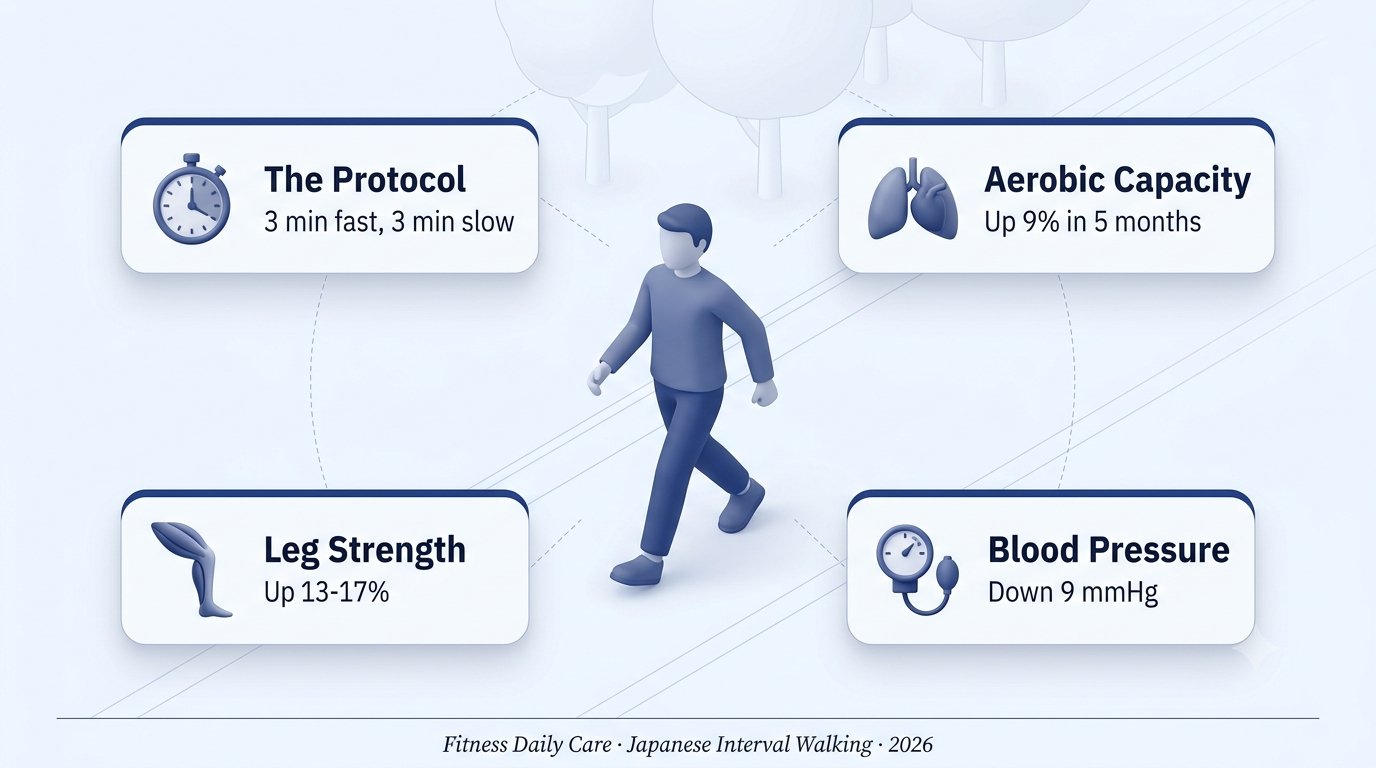
The method itself couldn’t be simpler: alternate 3 minutes of brisk walking with 3 minutes of slow, easy walking, repeated 5 times for a 30-minute session, done at least 4 days a week. What surprised me was the landmark study behind it — a 5-month randomized trial of 246 middle-aged and older adults found the interval group gained 9% more aerobic capacity and 13–17% more leg strength than a group walking continuously for the same amount of time, plus a clinically meaningful drop in blood pressure.
This article breaks down exactly what the research found, why alternating pace works better than steady walking, and how to actually structure a session.
Backed By 15+ Years Of Research
Shinshu University’s Hiroshi Nose and Shizue Masuki have studied this protocol since the mid-2000s, well before it trended online.
Steady Walking Plateaus Faster
The matched continuous-walking group in the landmark trial showed no significant gains in fitness or blood pressure over the same 5 months.
Intensity Is The Key Variable
Fast intervals sit around 70% of peak aerobic capacity — hard enough to matter, easy enough to sustain for 30 minutes total.
No Equipment Or Gym Needed
Any flat outdoor path or treadmill works, making this one of the lowest-barrier evidence-based protocols available.
The Protocol, Exactly As Studied
The BasicsThe original protocol alternates 3 minutes of fast walking at roughly 70% of peak aerobic capacity with 3 minutes of slow walking at roughly 40% of peak aerobic capacity. Repeated 5 or more times, that’s a 30-minute session, done at least 4 days per week.
A useful gut check for the “fast” interval: you should be breathing noticeably harder and able to say only a few words at a time — not comfortable, not gasping.
What The Landmark Study Actually Found
The EvidenceNemoto and colleagues at Shinshu University randomly assigned 246 men and women (mean age 63) to one of three groups for 5 months: no structured walking, moderate continuous walking, or high-intensity interval walking. Only the interval group showed significant improvements in peak aerobic capacity, thigh muscle strength, and resting blood pressure.
A follow-up study found that 5 months of interval walking improved fitness and lifestyle-disease markers by 10–20% overall — gains the continuous-walking group, doing the same total time, largely did not replicate.
Why Intervals Beat Steady Walking
The PhysiologySteady-state walking at a comfortable pace trains your aerobic system, but the intensity rarely climbs high enough to meaningfully challenge muscle strength or push cardiovascular adaptation further once your body adapts to that pace.
The fast intervals raise heart rate and muscular demand enough to drive both aerobic and strength adaptations simultaneously, while the slow intervals let you recover just enough to repeat the effort — essentially a low-impact version of interval training that almost anyone can sustain.
How To Start This Week
Getting StartedStart with 3–4 sessions in your first week rather than jumping straight to daily. Use a phone timer or a dedicated interval-walking app to cue the 3-minute switches so you’re not constantly checking a watch.
If 3 minutes at a hard pace feels like too much at first, shorten the fast interval to 1–2 minutes and build up — the alternating structure matters more than hitting the exact timing from day one.
Same 30 minutes, same steps roughly.
Different pace pattern, very different results.
- Warm up for 2–3 minutes at an easy pace before your first fast interval
- Walk fast for 3 minutes — hard enough that full sentences get difficult
- Walk slow for 3 minutes — recovery pace, not a full stop
- Repeat the cycle 5 times for a complete 30-minute session
- Aim for 4+ sessions a week to match the protocol used in the research
⚠️ Who Should Check With A Doctor First
1. Uncontrolled high blood pressure or heart conditions. The intensity spikes during fast intervals are moderate but real — get clearance if you have a diagnosed cardiovascular condition.
2. Joint pain that worsens with pace changes. The original study population was middle-aged and older adults, but anyone with significant knee or hip issues should start with shorter fast intervals.