
Apple Cider Vinegar for Weight Loss, The Real 12-Week Number
A double-blind trial gave overweight adults 15ml or 30ml of vinegar daily for 12 weeks. The higher dose lost 1.9kg more than placebo — dose-dependent, modest, and gone a month after stopping.
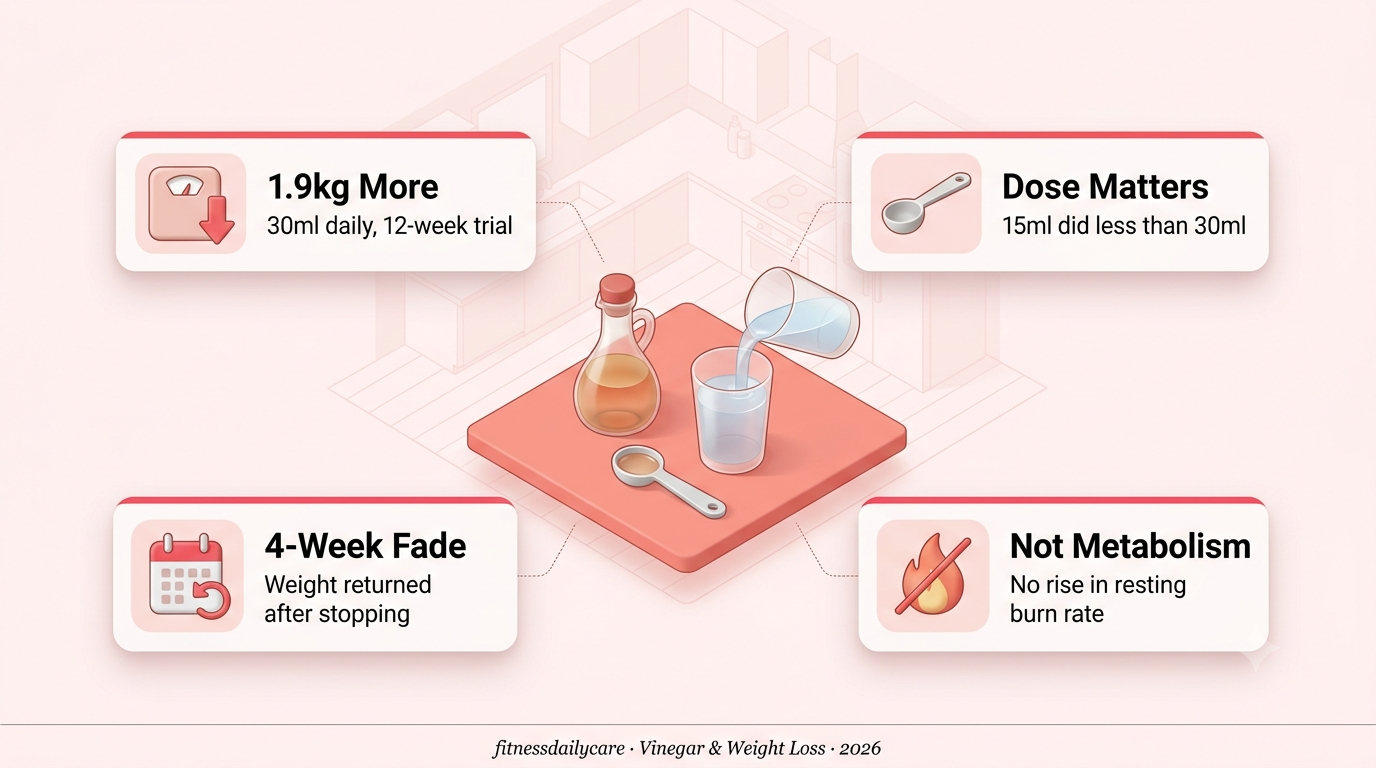
Apple cider vinegar for weight loss has been social-media folklore for years, usually paired with photos that promise more than any trial has ever measured. The actual research is smaller and more specific than the headlines. In 2009, Japanese researchers ran a 12-week double-blind trial on 175 overweight adults, split into three groups: a placebo drink, 15ml of vinegar a day, or 30ml a day. Every group’s diet and activity stayed the same — vinegar was the only variable. The 15ml group lost about 1.2kg more than placebo. The 30ml group lost 1.9kg more. The effect was dose-dependent, meaning more vinegar produced a bigger result, up to the doses tested.
A 2025 systematic review pooling 10 randomized trials and 789 participants found the same pattern held up: a statistically significant, modest reduction in body weight, BMI, and waist circumference across studies. That’s the good news. The catch is what happened after the original trial ended — participants who stopped drinking vinegar regained the lost weight within about four weeks. Vinegar didn’t reset anything permanently; it worked only while people kept taking it.
This article covers what the dose-response data actually shows, why researchers don’t think it works by “melting fat,” and how to use it safely if you want to test it yourself.
Why It May Work
Vinegar appears to delay gastric emptying and blunt post-meal blood sugar spikes, rather than raising metabolic rate directly.
What the 12-Week Trial Showed
Kondo et al. found a clear dose-response: 15ml lost 1.2kg more than placebo, 30ml lost 1.9kg more, over 12 weeks.
The Myth This Breaks
Vinegar does not increase resting metabolic rate or “melt fat.” The effect is modest and works through appetite and glucose response.
What Actually Works
Consistent daily use, diluted, alongside an existing diet — not a one-time detox. Stop, and the effect fades within weeks.
Vinegar isn’t a fat-melting miracle.
It’s a one-to-two-kilogram nudge, and only while you keep taking it.
Apple Cider Vinegar for Weight Loss, the Practical Version
Use 15 to 30ml Daily, Diluted in Water
The Tested ProtocolThe trial used 500ml of a beverage containing 15ml or 30ml of vinegar, split across the day. That’s roughly 1 to 2 tablespoons of vinegar total, always mixed into a larger volume of water — not taken straight.
Protect Your Teeth and Esophagus
Safety FirstUndiluted vinegar is acidic enough to erode tooth enamel and irritate the esophagus with regular use, and case reports exist of injury from vinegar capsules that dissolved unpredictably. The trials that showed benefit used a diluted beverage, not concentrated shots or supplements.
Don’t Expect It to Replace Your Diet
Realistic SizingEven at the higher dose, the trial’s best-case result was under 2kg over three months — meaningful, but nowhere near the transformations shown in before-and-after posts. It belongs in the same category as water before meals: a small, low-cost amplifier for a plan you’re already following, not a plan by itself.
Keep Taking It, or Expect the Effect to Fade
Honest ExpectationsIn the original trial, participants who stopped drinking vinegar regained the weight within about four weeks. That means this isn’t a short “reset” you do for a few days — any benefit appears to depend on sustained, ongoing use.
- 15-30ml (1-2 tbsp) per day — the dose range used in the studied protocol
- Always diluted — mix into at least 8oz of water, never drink concentrated
- Sustained daily use — benefit appears to fade within weeks of stopping
- Ask a doctor if on diabetes medication — vinegar can lower blood sugar response
- Keep your existing deficit — vinegar amplifies a diet, it doesn’t replace one
⚠️ What Apple Cider Vinegar Won’t Do
1. It won’t dramatically boost metabolism. The best available evidence indicates vinegar does not meaningfully raise resting metabolic rate — the modest weight change seems tied to appetite and blood-sugar effects, not fat-burning.
2. It’s not risk-free at high intake. Undiluted vinegar and vinegar capsules carry real risk of dental erosion and esophageal irritation, and anyone on blood-sugar-lowering medication should check with a doctor first, since the effects can compound.
3. It’s not a one-time fix. The weight-loss effect reversed within about four weeks after participants stopped — this is a habit to sustain, not a short detox.
The effect disappeared within a month of stopping.
Vinegar isn’t a fix, it’s a habit you have to keep.