
Creatine for Women, Why the
“Bulky” Myth Is Wrong
A new 2026 trial found creatine improved reaction time and brain creatine levels in menopausal women. Here’s what the research actually shows, and what it doesn’t.
For years, creatine sat in a gym bag marked “men only,” at least in the popular imagination. Women were historically underrepresented in creatine research, a gap that’s closed considerably since a landmark 2021 review pulled the female-specific evidence together for the first time. Now creatine for women is one of the most searched supplement topics in wellness feeds, and the newest research is finally specific to women’s physiology instead of borrowed from studies on male athletes.
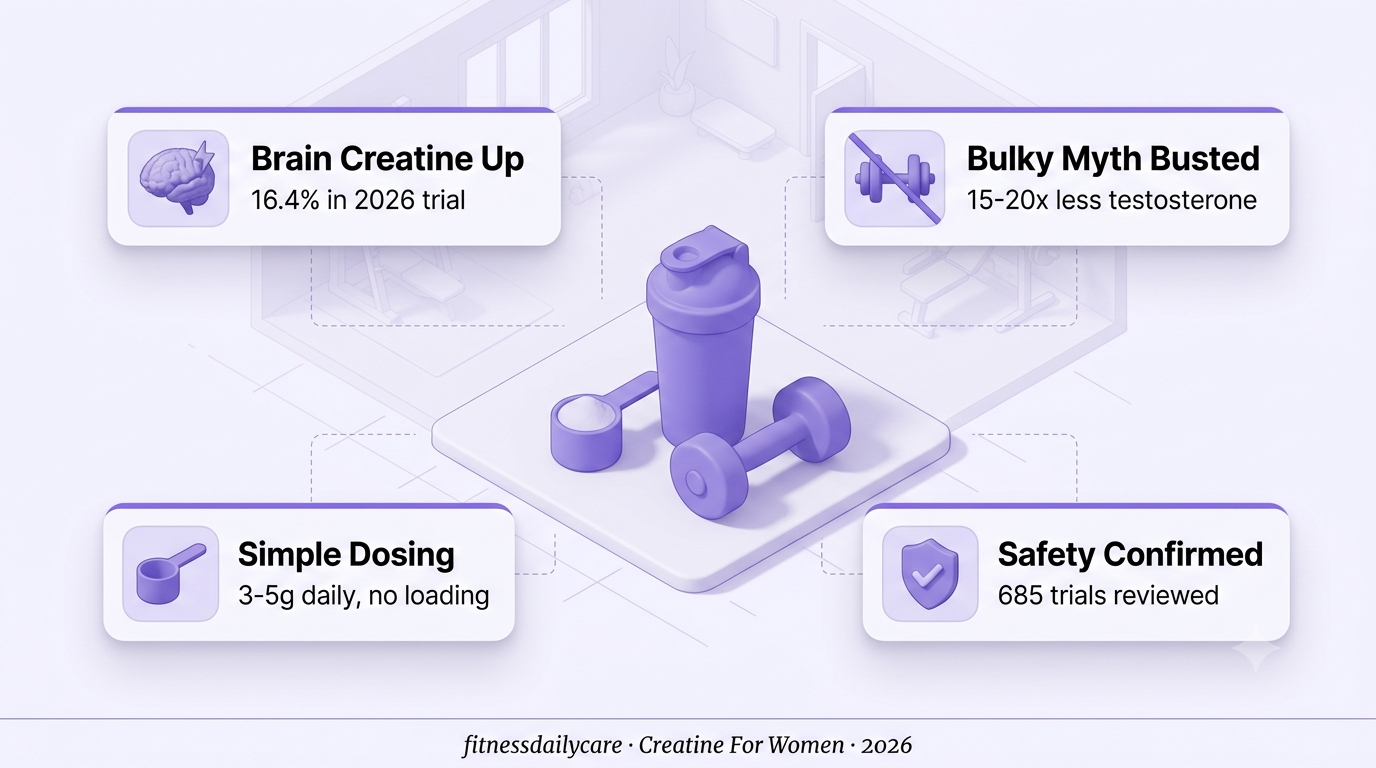
The biggest myth holding women back is the fear of getting “bulky.” Physiologically, that’s not how it works. Women produce roughly 15 to 20 times less testosterone than men, which makes dramatic muscle growth from creatine alone unlikely. A related myth, that creatine causes hair loss, traces back to a single 2009 study in male rugby players that showed a temporary rise in a hormone linked to hair loss, not actual hair loss itself, and the finding has never been replicated.
What’s genuinely new in 2026 is the CONCRET-MENOPA trial, the first randomized controlled trial to test creatine specifically in perimenopausal and menopausal women. Over 8 weeks, a medium dose of 1,500mg of creatine hydrochloride daily improved reaction time by 6.6% compared with 1.2% for placebo, and increased frontal brain creatine levels by 16.4%, with no severe adverse effects reported.
Does it cause bulk?
No. Women produce roughly 15 to 20 times less testosterone than men, making dramatic muscle growth from creatine alone physiologically unlikely.
Does it cause hair loss?
The claim traces to one 2009 study in male rugby players showing a hormone increase, not actual hair loss, and it hasn’t been replicated since.
What CONCRET-MENOPA found
The 2026 trial found 1,500mg daily improved reaction time and brain creatine levels in menopausal women over 8 weeks, with no severe adverse effects.
How much, and when
3-5g of creatine monohydrate daily, no loading phase required. Timing matters less than daily consistency.
Know why the water weight isn’t bloat
MythbustingThe 1-2 pound water increase some people notice in the first week or two sits inside muscle cells, as part of the mechanism that helps stimulate muscle protein synthesis. It isn’t fat, and it isn’t the kind of bloating people picture when they hear “water retention.”
Pair creatine for women with resistance training
MechanismA 2026 meta-analysis of seven randomized trials in 608 postmenopausal women found creatine increased lean mass by an average of 0.37kg and leg-press strength by 7.5kg compared with placebo, with the clearest benefits in studies combining at least 5g daily with resistance training. Without lifting, creatine has very little to work with.
Consider it seriously through perimenopause and after
TimingPost-menopausal women may benefit the most, given declining estrogen, accelerated muscle loss, and reduced bone density during this stage. Some research suggests higher doses, around 0.3g per kilogram of body weight daily, show the clearest skeletal muscle benefits after menopause when paired with resistance training.
It’s not a men’s supplement.
It’s one of the safest, most studied ones women aren’t taking enough of.
- 3-5g of creatine monohydrate daily — no loading phase needed, timing matters less than consistency
- The “bulky” myth doesn’t hold up — testosterone differences make dramatic muscle growth from creatine alone unlikely
- The water weight is intracellular — not bloat, and it plateaus after the first week or two
- Pair it with resistance training — that’s where the strength and lean mass benefits actually show up
- Check with a clinician first — if pregnant or managing kidney disease
⚠️ What Creatine for Women Doesn’t Do
1. It doesn’t work well without resistance training. Creatine extends training capacity, it doesn’t build muscle by itself.
2. High-dose cognitive claims (10g or more daily) are mostly tested in sleep-deprived or older adults. Benefits in healthy, well-rested people are far less established.
3. It’s not risk-free for everyone. Anyone with kidney disease, or who is pregnant, should confirm with a clinician before starting, despite strong general safety data.