
The Wolverine Peptide,
What BPC-157 Actually Does
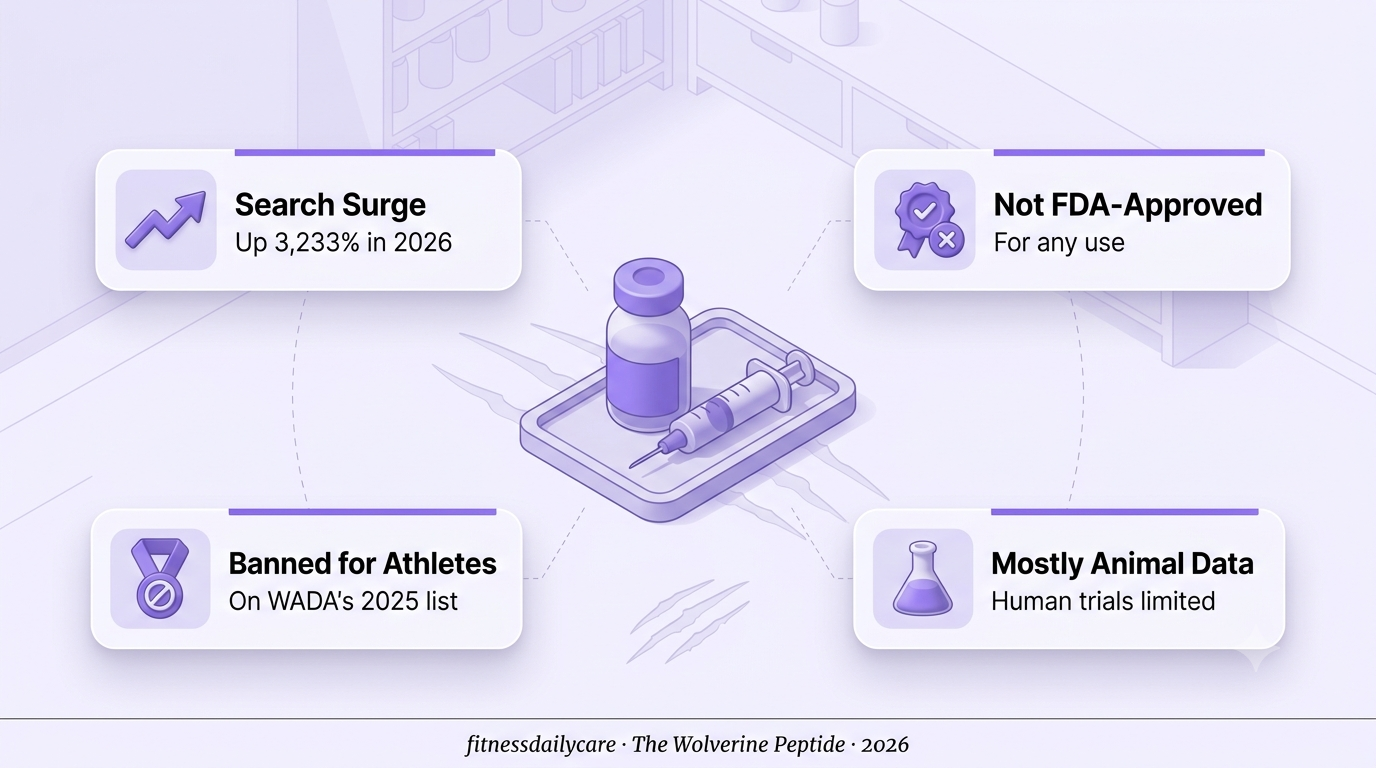
Search interest in the wolverine peptide has surged over 3,000% this year. Here’s what the nickname refers to, what the evidence actually shows, and where the regulatory gaps are.
The name comes from a comic book character who heals from almost anything. The wolverine peptide isn’t a single compound, it’s an online nickname for stacking two research peptides, BPC-157 and TB-500, and searches for the term have surged over 3,000% this year, according to trend-tracking data. The comparison to a superhero’s healing factor is doing a lot of marketing work that the science hasn’t caught up to yet.
Here’s what the two compounds actually are. BPC-157 is a 15-amino-acid peptide originally isolated from human gastric juice, studied mostly in animal models for tendon, ligament, and gut lining repair. TB-500 is a synthetic fragment of Thymosin β4, a protein your body already produces, studied for broader tissue repair through actin regulation and stem cell mobilization. Both have a real research history, just not the kind that supports casual, unsupervised use.
What the online buzz tends to leave out: neither compound is FDA-approved for any use, both were removed from the FDA’s list of substances eligible for pharmacy compounding, with a formal review scheduled for mid-2026, and both sit on the World Anti-Doping Agency’s prohibited list. A catchy nickname doesn’t change any of that.
Why “Wolverine”?
A nickname coined in fitness and biohacking forums for stacking BPC-157 and TB-500, referencing the Marvel character’s healing factor. It’s marketing shorthand, not a medical term.
Where it stands with the FDA
Both peptides were removed from the FDA’s list of substances eligible for pharmacy compounding, with a Pharmacy Compounding Advisory Committee review scheduled for mid-2026.
Banned for competitive athletes
Both compounds sit on WADA’s Prohibited List. Any tested athlete using them risks a doping violation, regardless of intent or reason.
Mostly animal, not human
Most of the healing data comes from preclinical and animal studies. Large-scale human clinical trials remain limited, especially for BPC-157.
The wolverine peptide name is marketing, not a medical claim
MythbustingComparing a research peptide to a superhero’s regeneration ability sets an impossible bar. BPC-157 and TB-500 have documented preclinical activity in animal tendon, ligament, and gut healing models, but that’s a long way from the instant, total recovery the nickname implies.
The vendor risk is bigger than most people realize
SafetyMost online sources sell these compounds labeled “research use only, not for human consumption,” which reflects their unapproved regulatory status rather than a technicality. That labeling means no guaranteed sterility, purity, or dosing accuracy, since these products sit outside standard pharmaceutical oversight.
If you’re seriously considering it, that means a licensed provider
Next stepSome clinics now offer supervised peptide protocols after a full medical evaluation, a very different path from ordering a research chemical online. Licensed providers screen for candidacy, monitor for side effects, and treat peptide therapy as one part of a broader recovery plan, not a stand-alone fix.
It’s named after a superhero.
The evidence is still very human, and still very early.
- Know it’s not FDA-approved — for any use, and neither is TB-500
- Recognize the athlete risk — both compounds are banned under WADA’s rules, testing positive doesn’t require intent
- Read “research use only” as a warning — it signals no human safety oversight, not a legal workaround
- Separate animal data from human proof — most of the compelling evidence is preclinical
- Start with a licensed provider — if you’re genuinely considering it, that conversation comes first
⚠️ What the “Wolverine” Nickname Glosses Over
1. Vendor products often lack quality control. Contamination, inaccurate concentration, and inconsistent sterility are real risks with unregulated peptide sources.
2. It’s not a substitute for rehab, sleep, or nutrition. Even proponents describe peptide use as an accelerant within a broader recovery plan, not a stand-alone fix.
3. Using it while competing can end a season. Both BPC-157 and TB-500 are on WADA’s Prohibited List, and a positive test doesn’t require proof of intent.