
You have zero gym membership, zero dumbbells, and zero excuses left. That last part might sting a little, but it is also the most liberating fitness truth you will ever hear. The body you are sitting in right now is the only tool you need to build real, lasting strength. Millions of people have transformed their fitness starting from a living room floor with nothing but determination and a basic plan — and you can absolutely do the same.
The fitness industry spends billions of dollars convincing you that progress requires machines, supplements, and expensive coaching. The reality is far simpler. A well-designed home workout routine for beginners with no equipment can build muscular endurance, improve cardiovascular health, increase flexibility, and boost your mood in as little as three weeks. This guide gives you everything you need to start today, stay consistent, and actually see results.
Why Bodyweight Training Works Better Than You Think
Before diving into the routine itself, it helps to understand why this approach is scientifically sound and not just a budget compromise. Bodyweight exercises force multiple muscle groups to work together, which means your body develops functional strength rather than isolated muscle bulk. Movements like squats, push-ups, and lunges mimic real-life motion patterns, making everyday tasks easier over time.
Research consistently shows that progressive bodyweight training produces strength and hypertrophy gains comparable to resistance training with weights, especially for beginners. Your muscles do not know whether they are pushing against a barbell or your own bodyweight — they only respond to tension and challenge. When you build a proper home workout routine for beginners with no equipment, you are not settling for less. You are starting smart.
The 5 Essential Movement Patterns Every Beginner Needs
A balanced routine should cover five foundational movement categories. Missing any of these creates imbalances that lead to poor posture, injury, and stalled progress.
1. Push Movements — Push-ups, incline push-ups, and wall push-ups train your chest, shoulders, and triceps. Start with the incline variation against a countertop if a full push-up feels too challenging.
2. Pull Movements — Without a pull-up bar, you can simulate horizontal pulling using a sturdy table edge for bodyweight rows. This targets your back and biceps, which most beginners neglect entirely.
3. Squat Patterns — Bodyweight squats, sumo squats, and eventually jump squats develop your quads, hamstrings, and glutes while strengthening the knee joint.
4. Hinge Patterns — Good mornings and single-leg Romanian deadlifts using no weight protect your lower back and activate your posterior chain, which is the muscle group responsible for posture and power.
5. Core Stability — Planks, dead bugs, and bird dogs build deep core strength that supports every other movement you perform, athletic or otherwise.
Your 4-Week Beginner Schedule (No Equipment Required)
Consistency beats intensity every single time when you are just starting out. Here is a simple weekly framework that prevents burnout while building momentum.
Days 1, 3, and 5 — Full Body Strength Circuit:
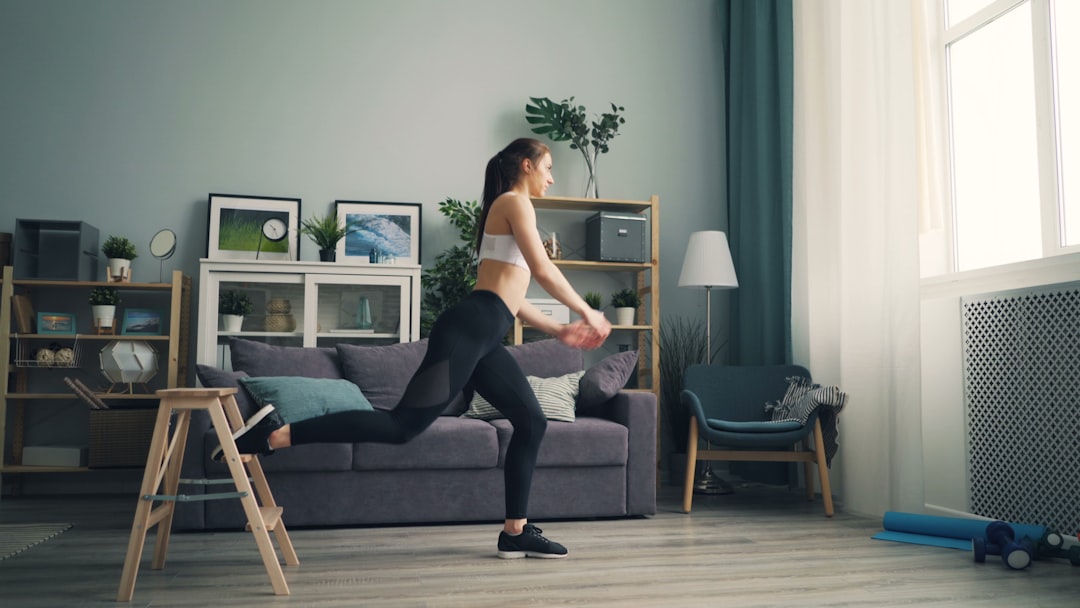
- 3 rounds of 10 bodyweight squats, 8 incline push-ups, 30-second plank, 10 reverse lunges per leg, and 10 glute bridges with a 60-second rest between rounds.
Days 2 and 4 — Active Recovery and Mobility:
- 20 minutes of light walking combined with hip circles, cat-cow stretches, and thoracic spine rotations. This is not optional padding — mobility work directly improves your strength training performance.
Days 6 and 7 — Rest or Gentle Movement:
- True rest accelerates muscle repair. Use this time intentionally rather than feeling guilty about it.
How to Make Progressive Overload Work Without Weights
The biggest mistake beginners make with bodyweight training is staying comfortable. Your body adapts to any stimulus within two to three weeks, which means you must consistently increase the challenge. This concept is called progressive overload, and it applies perfectly to a home workout routine for beginners with no equipment.
Progression options include adding more repetitions, reducing rest periods, slowing down the lowering phase of each movement, or advancing to harder exercise variations. A push-up with a three-second lowering phase is dramatically more challenging than a fast rep. A single-leg squat is exponentially harder than a standard squat. Always have a next-level variation ready before you plateau.
3 Common Beginner Mistakes That Kill Progress
Skipping the warm-up — Five minutes of light movement increases blood flow, reduces injury risk, and improves overall performance. Jumping straight into squats with cold muscles is a recipe for soreness and discouragement.
Training every single day — More is not always better. Muscles grow during recovery, not during the workout itself. Overtraining leads to fatigue, irritability, and eventual burnout within the first month.
Chasing perfection over consistency — A 15-minute workout you complete beats a 60-minute workout you skip every single time. Build the habit first and increase the duration gradually.
Nutrition Basics That Support Your New Routine
Exercise is the stimulus, but food is the raw material. You do not need a complicated meal plan, but a few principles make a measurable difference. Prioritize protein at every meal — eggs, legumes, chicken, Greek yogurt, and cottage cheese all support muscle repair without requiring expensive supplements. Stay hydrated throughout the day, not just during your workout. Aim for seven to nine hours of sleep because this is when the real physical adaptation happens.
Action Tips to Start Your Routine Today
Set a specific workout time and treat it like a non-negotiable appointment. Lay out your workout space the night before — even clearing a small rug in your bedroom signals your brain that this space means movement. Track your workouts in a simple notebook and record your reps each session. Progress on paper is a powerful motivator during weeks when you cannot see physical changes yet.
Join an online community of people following a similar path. Accountability partners and group encouragement dramatically increase adherence rates in the first 90 days. Share your workout on social media, even if it feels awkward at first. That public commitment creates real psychological pressure to follow through.
This home workout routine for beginners with no equipment is not a temporary fix or a consolation prize for people without gym access. It is a legitimate, science-backed foundation that countless athletes and fitness professionals still return to throughout their training lives. The floor beneath your feet is your gym. Your body is your barbell. The only missing ingredient is your decision to begin.
Drop your experience in the comments below — whether you completed your first workout today, hit a new personal record, or struggled through a tough session. Every rep counts and every story matters.