
Caffeine and Metabolism, What a New
2026 Study Found
A 2026 trial measured exactly where caffeine’s fat-oxidation benefit peaks, and where more caffeine stops adding anything at all
I wanted to know what the caffeine and metabolism research actually measured, not just whether coffee “boosts” anything — and a new 2026 trial gave me a specific, dose-by-dose answer. The short version: the effect is real and measurable, not placebo.
But it’s also smaller than the marketing suggests, it has a clear ceiling past which more caffeine does nothing extra, and it fades meaningfully with daily, repeated use. None of that makes caffeine useless — it just makes the effect far more modest and specific than “coffee burns fat.”
This isn’t about whether to drink coffee. It’s about what the research actually found: the dose where the fat-oxidation benefit tops out, how quickly tolerance builds, and why a 12-year study of nearly 58,000 people found that more caffeine over time didn’t translate into less weight.
Why It Boosts Energy Expenditure
Caffeine stimulates the sympathetic nervous system, raising adrenaline, which increases both resting energy expenditure and the rate the body taps fat stores for fuel.
There’s a Dose Ceiling
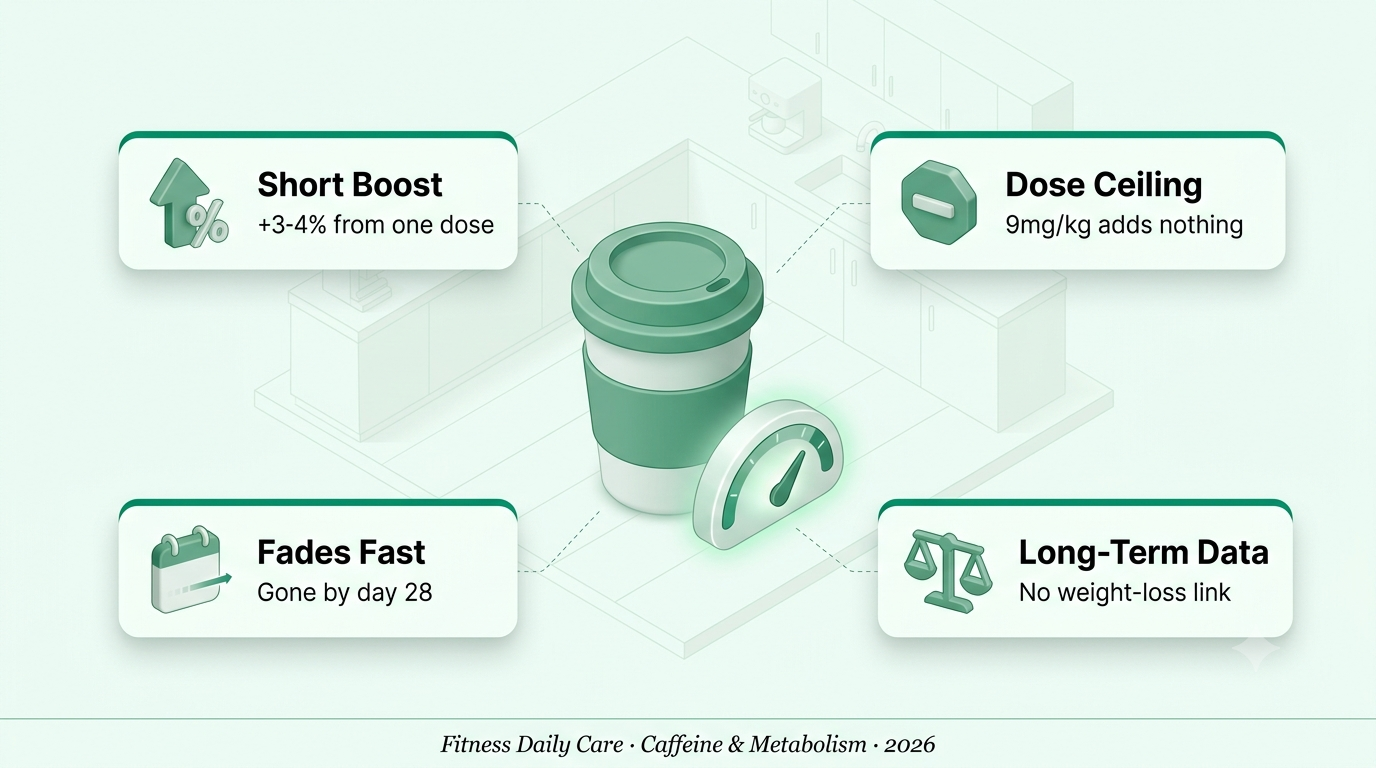
A 2026 trial found 3 and 5mg/kg boosted fat oxidation during exercise, but 9mg/kg — a very high dose — added no extra benefit.
The Effect Fades Fast
In a 28-day trial, the fat-oxidation boost from a caffeine-based drink was present after the first dose but gone by day 28 as the body adapted.
It Doesn’t Predict Weight Loss
A 12-year study of nearly 58,000 health professionals found people who increased caffeine intake over time didn’t lose weight — they gained slightly.
A real effect isn’t the same as a big one.
Caffeine’s metabolic boost is both.
The Short-Term Boost Is Real
Classic TrialA classic 1989 study found a single 100mg dose of caffeine raised resting metabolic rate by about 3 to 4% over roughly 2.5 hours. When the same dose was repeated every 2 hours across a day, total resting energy expenditure rose by 8 to 11% — but the effect didn’t carry into the overnight hours once dosing stopped.
There’s a Dose Ceiling, Not a Straight Line
2026 StudyA 2026 trial in overweight and sedentary women tested 3, 5, and 9mg/kg of caffeine before exercise at the intensity that maximizes fat oxidation. Both 3 and 5mg/kg significantly boosted fat oxidation compared to placebo — but 9mg/kg (an unusually high dose) gave no additional benefit. Researchers concluded 3mg/kg offered the best balance between fat-oxidation benefit and cardiovascular safety.
Tolerance Builds Within Weeks
Fades FastIn a 28-day trial of a caffeine-based energy drink, fat oxidation rose measurably after the very first dose — but by day 28 of daily use, that boost had disappeared entirely, with no measurable difference from baseline. The body adapts to repeated caffeine exposure faster than many people assume.
It’s Not a Weight-Loss Guarantee
Long-Term DataA 12-year cohort study following nearly 58,000 health professionals found that people who increased their caffeine intake over time didn’t lose weight — they gained slightly. A short-term metabolic boost in a lab setting doesn’t automatically translate into sustained weight change in daily life.
Twelve years and 58,000 people
found more caffeine, not less weight.
- Don’t chase higher doses for fat-burning — research shows a ceiling around 3-5mg/kg, with no extra benefit beyond it
- Space out or cycle intake — daily, back-to-back use is exactly what builds tolerance
- Don’t treat caffeine as a weight-loss tool on its own — long-term outcome data doesn’t support that
- Time it around activity if fat oxidation is the goal — most studies dosed caffeine 30-60 minutes before exercise
- Track total daily intake, not just one cup — coffee, tea, and supplements stack up quickly
⚠️ Where the Evidence Has Limits
1. High doses carry real risk, not just diminishing returns. 9mg/kg for a 70kg person is roughly 630mg — close to the range where elevated heart rate, blood pressure, and jitteriness become more likely.
2. Tolerance isn’t just about weight. The same adaptation that blunts the metabolic boost also applies to caffeine’s alertness effects, which is part of why regular users often feel their usual coffee “doing less.”
3. Individual caffeine metabolism varies widely. Genetics affect how quickly people clear caffeine, so the same dose can hit two people very differently.