
Fasting Blood Sugar,
Start With This Dinner Fix First
Your morning fasting number is mostly a report card on last night’s dinner. Move the meal, cut the evening carbs, walk it off — and watch the readout shift.
Most people blame morning fasting glucose on genetics or willpower at breakfast. Neither is the main driver. Your fasting number at 7 AM is largely a delayed reading of what happened between 7 PM and midnight the night before — the food, the timing, and what you did after eating.
The evidence is stacking up fast. A 2024 Kobe University crossover trial found that pushing dinner just one hour later was enough to significantly impair glucose tolerance in healthy young adults. NYU Langone’s early time-restricted eating study in prediabetics saw less time above 140 mg/dL after only 7 days of eating earlier — with zero weight loss required. Meta-analyses on low-carb dinners in prediabetes consistently show improved fasting glucose within weeks.
None of that is exotic. It’s not fasting protocols, medications, or supplements. It’s dinner, moved earlier and adjusted. This piece walks through what actually happens overnight, and the four dinner changes that move the needle fastest.
ADA says under 100 mg/dL
Under 100 = normal, 100–125 = prediabetes, 126+ = diabetes on the fasting plasma glucose scale.
Dinner timing hits hardest
Even a 1-hour delay past your normal dinnertime impairs glucose tolerance (Kobe University, 2024).
Eating window closes matter
Early time-restricted eating (finishing food by 6–7 PM) reduces time above 140 mg/dL in prediabetics in 1 week.
Not for everyone at all times
Pregnancy, T1D, older adults, or medicated diabetics need medical guidance before restricting evening intake.
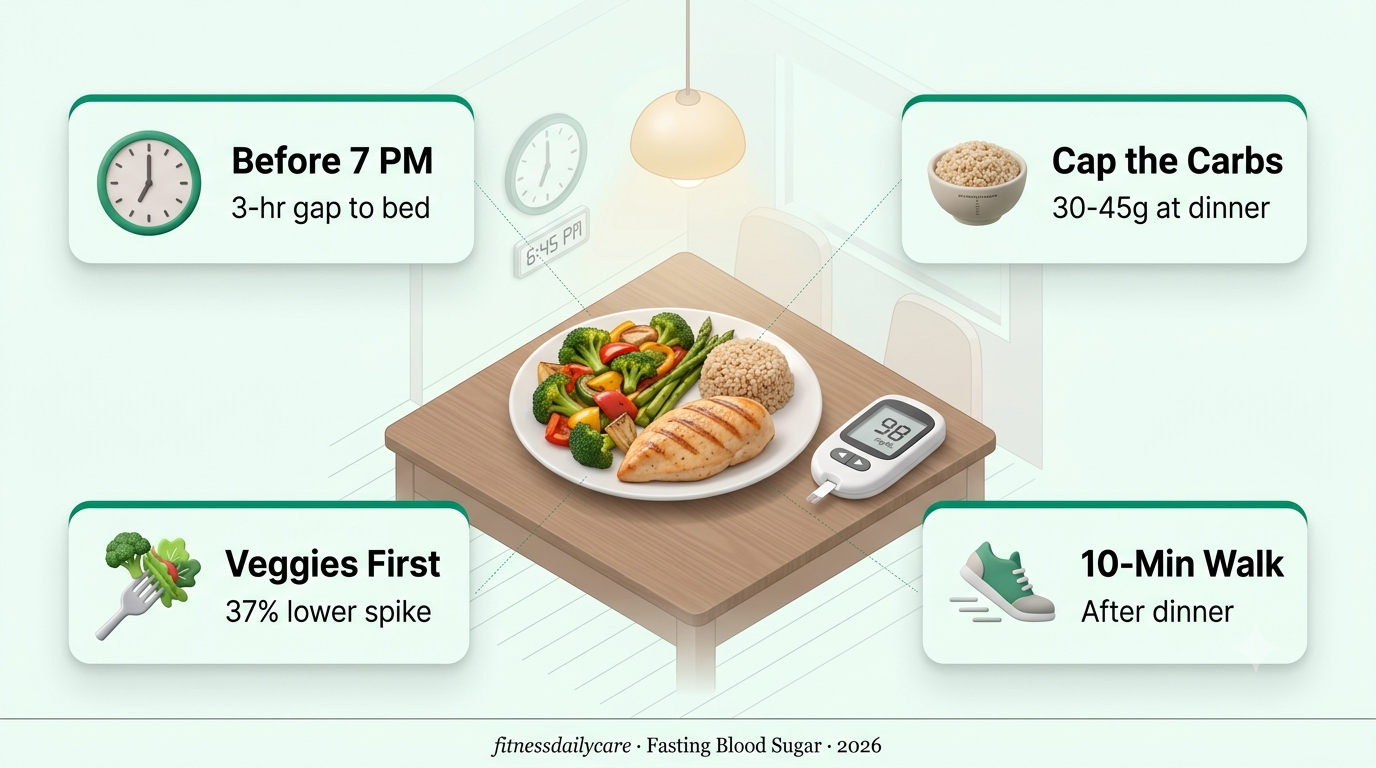
Move dinner earlier — before 7 PM if possible
BIGGEST LEVERThis is the single most under-appreciated fix. Aim to finish eating at least 3 hours before bed. If you sleep at 11 PM, that means the last bite by 8 PM — earlier is better. Late dinners collide with the natural circadian dip in insulin sensitivity that starts around 8–9 PM, so the same meal at 6 PM produces a much smaller and shorter glucose curve than at 9 PM.
Cut evening carbs first (not breakfast carbs)
HIGH ROIMost low-carb advice pushes people to skip morning toast. That’s backwards for fasting glucose. Your body handles carbs better earlier in the day. If you’re going to reduce anywhere, cut dinner carbs first: shrink the rice portion, skip the bread basket, save dessert for lunch instead. Meta-analyses in prediabetes show carb-reduced dinner protocols improve fasting glucose meaningfully within 2–8 weeks.
Use meal-order sequencing at dinner
STACKEverything from the sister piece on postprandial spikes applies here, doubled. Eat non-starchy vegetables first, then protein and fat, then whatever starch or dessert you’re having. The Shukla protocol cuts the post-dinner glucose peak by roughly 29–37% — and a smaller peak means less overnight glycemic mess for your fasting number to inherit.
Take a 10-minute walk after dinner
FREE WINNot a workout — a walk. A 10-minute post-dinner stroll pulls glucose into working muscle instead of leaving it in your bloodstream, blunting the peak that would otherwise still be elevated at bedtime. Combined with an earlier meal and lighter carbs, most CGM users watching their own overnight curve see a flatter, lower trace — and a lower reading in the morning.
Your morning fasting number
is last night’s dinner in disguise.
- Timing — finish eating 3+ hours before bed, ideally by 7 PM
- Carbs — cap dinner starch at ~30–45g (about 1 oz), cut portion first, not breakfast
- Order — veggies → protein/fat → carbs, always at dinner
- Move — 10-minute walk within 30 minutes of finishing the meal
- No graze zone — no snacks, drinks with calories, or dessert after dinner ends
⚠️ WHEN DINNER TWEAKS AREN’T ENOUGH — OR AREN’T APPROPRIATE
1. Persistently over 100 mg/dL for weeks. Two consecutive fasting readings ≥100 mg/dL warrant a clinical check-in, not more DIY. Ask for an A1c and OGTT if you haven’t had one.
2. Existing diabetes with insulin or sulfonylureas. Restricting evening carbs while on these medications risks overnight hypoglycemia. Adjust with your prescriber first, not from a blog.
3. Pregnancy, teens, and older adults. Skipping dinner or eating extremely early can compromise nutrition needs in these groups. This piece is written for otherwise healthy adults with mildly elevated fasting glucose.